
Ritebound Boxes, Planks and Supports: Build Piece Guide
What each Ritebound build piece does: square boxes, bridge planks, vertical supports and trampolines, with the span and height each one actually covers.
Ritebound gives you four usable pieces and a locked fifth. The store descriptions name three of them explicitly and the build bar shows all four, but the descriptions never say what each one covers, which is why the first stuck level is usually a span problem rather than a logic problem. This guide covers what each piece is for, where it fails, and the placement detail that decides whether the queue walks it or falls off it. The walkthrough hub → puts the pieces in the context of a full run.
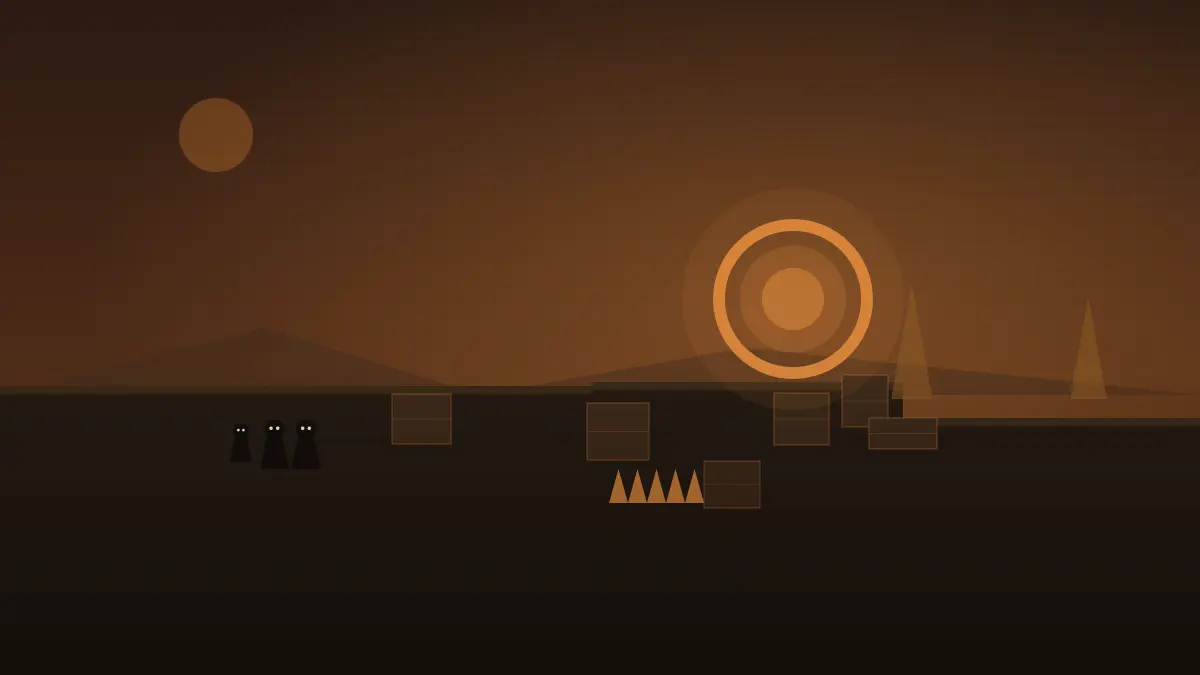
What are the four build pieces?
The square box. The core piece, and the only one that works as both a step and a wall. On the PlayStation store page the square is described as a step or a low wall, which is the most accurate summary available: one box is one unit of height and one unit of width, and the queue treats it as floor as soon as its top face is flush with a ledge.
The horizontal plank. A bridge. It spans gaps that a square cannot, and the store description frames it as the piece that crosses a wide gap. The catch is that it needs ground at both ends; a plank with one end over a pit folds the route rather than extending it.
The vertical support. A taller, thinner box. The PlayStation description calls it a high support, and in practice it is the piece that reaches a ledge without a staircase. Placed against a wall face it reads as a ramp to the queue; placed one tile away it reads as a pillar they walk around.
The trampoline. The red launch bar. It throws the cultists into the air, which makes it the only piece that gains height without occupying the ground below. It is also the piece most often wasted, because a launch that overshoots the landing ledge is worse than no launch at all.
What do the counters under each slot mean?
Each slot has a skull count, and that count is the number of that exact piece you may place on the current attempt. The budget is not shared across slots: three boxes and one plank means three box placements and one plank placement, not four of anything.
That distinction decides most of the middle-run plates. A level with four boxes and one plank is not a four-crossing level; it is a one-bridge level with three steps. Players who read the counters as a single pool tend to build staircases where the level wanted a single span.
Pan the level before placing anything and write down the number of gaps wider than one box and the number of ledges higher than one box. If the gap count exceeds the plank count, one of those gaps is meant to be walked around, not crossed.
Where does each piece fail?
Boxes fail when they are placed one tile away from the ledge they are meant to serve. The front of the queue will jump the gap; the tail will fall into it. Flush placement is the whole skill.
Planks fail at the ends. A plank laid from the near bank toward the far bank is correct on a flat crossing and wrong on a rising one, because the far end lands below the ledge and the queue walks underneath it.
Supports fail when they are used as steps. The piece is tall, and a tall piece placed in the middle of a corridor becomes an obstacle the queue has to be routed around. Use it against a face, never in open ground.
Trampolines fail when they are placed directly under the target ledge. The launch arc carries the cultists into the wall above the ledge and drops them back. One tile back from the ledge is the placement that lands them on top.
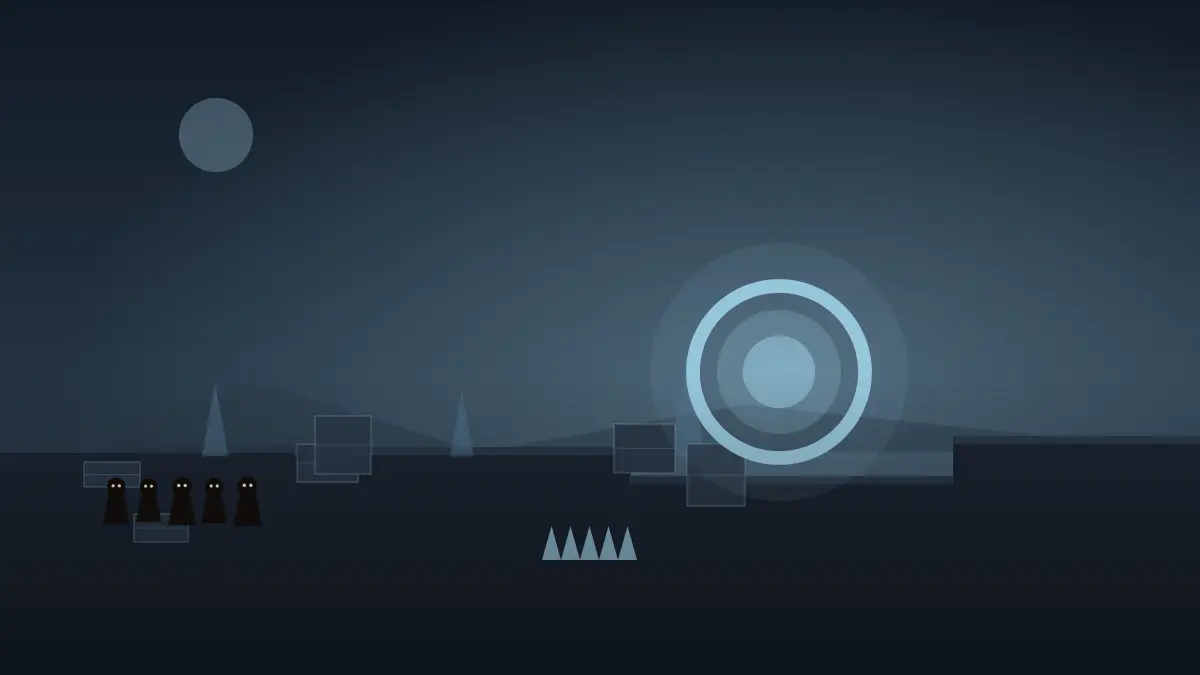
Can a box block a hazard?
Yes, and that is the second job the square box does. A box placed over a spike strip covers it, and the queue will walk across the box instead of the spikes. The PlayStation description also mentions using boxes to shield the cultists from danger, which matches the cover behaviour shown in the spike corridor plates.
The order matters more than the placement. Cover first, bridge second. If you lay a plank over an uncovered spike strip, the plank is now the only piece standing between the queue and the spikes, and there is no remove tool to fix the mistake. The traps guide → lists which hazards can be covered and which have to be avoided.
Which piece should you save for last?
The plank, on almost every plate. It covers the most distance, it is the only piece that spans water, and it is the piece whose absence most often makes a level unsolvable rather than merely slow. Build the steps first, then ask whether the remaining gaps can be walked around, and only then lay the bridge.
The trampoline is the second piece to hold. It is the only way to gain height without ground, which makes it mandatory on the raised-portal plates near the end of the run, and it cannot be substituted with a stack once the counter is spent.
References
Store facts and platform details are checked against Ritebound on Steam ↗, PlayStation Store (PPSA40099) ↗ and Nintendo eShop ↗. Comparison titles link to their own store pages where quoted.
Official source: Nintendo eShop — Ritebound ↗
FAQ
How many boxes can you place in Ritebound?
It depends on the level. The skull counter under the box slot sets the limit for that attempt, and it refills when you restart. Some plates allow five or more, others allow one.
Can you pick a box back up?
No remove or pick-up action appears in any released footage or store description. Placement is permanent for the attempt, which is why a broken route is almost always a restart.
What is the red bar in the build bar?
The trampoline. It launches the cultists upward and is the only piece that gains height without needing ground underneath.
Do boxes float?
No. The pieces read as solid objects that rest on terrain. A plank with no ground under one end will not hold a route, and a box dropped into a pit makes a step partway down rather than filling the pit.