
Ritebound Levels 31-40 Walkthrough: The Final Decade
Ritebound levels 31-40 walkthrough: the last ten plates, the long chain routes, and the checks that stop a finale run from collapsing at the portal.
The last ten plates are long rather than new. Nothing appears in levels 31 to 40 that you have not already used, but the routes run across the full width of the level, the hazards are layered on top of each other, and a single misplaced piece fails a route two screens after the mistake. The Levels 21-30 notes → teach the chaining habit these plates assume; here is how the finale uses it.
What do the last ten levels actually test?
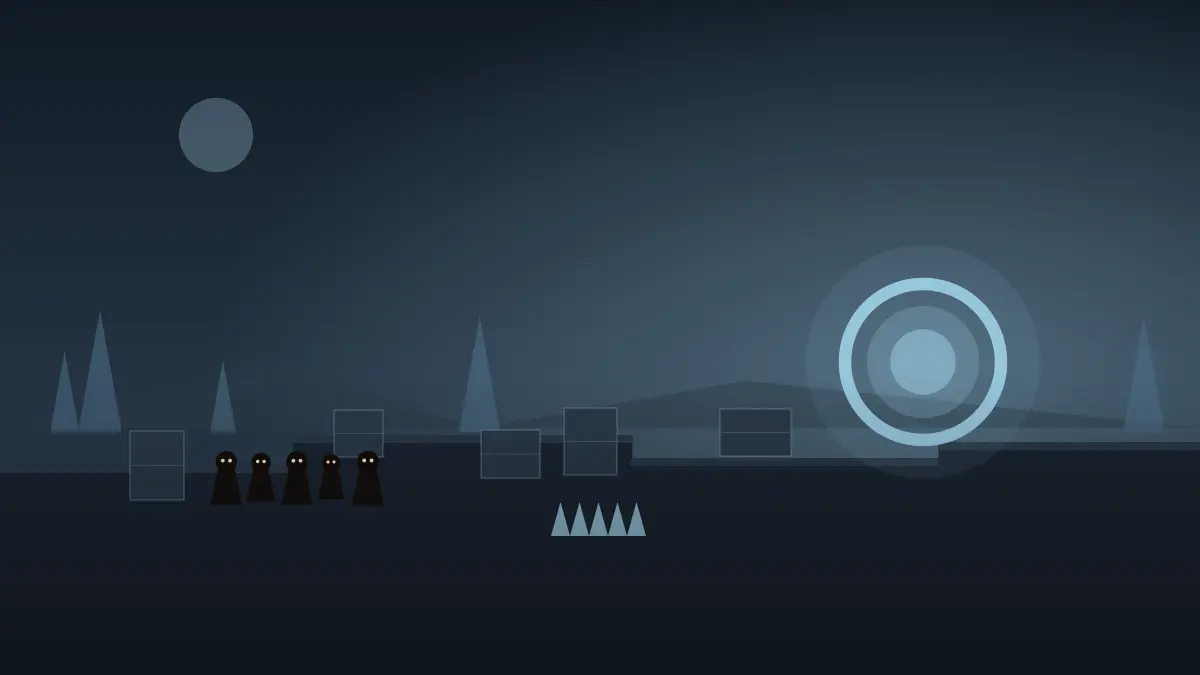
Patience with the queue. The geometry in the finale is not much harder than plate 24 or plate 30. What changes is the number of cultists in transit at once: the line is long enough that a piece placed after the door opens has to be reachable by a cultist who is already two platform widths away from it.
That produces a specific failure that looks like a bug. The front of the line reaches the portal, the back of the line stops, and the level refuses to complete even though the portal is glowing. The cause is a gap that only the tail of the queue can fall into, usually at the foot of a staircase where the last cultist steps off a box at a slightly different angle.
The second test is hazard layering. The finale puts a spike strip under a bridge, water beside a spike strip, and a gargoyle above the landing zone. Each of those is a known problem from an earlier decade, and the plate expects you to solve them in the right order rather than all at once.
Level-by-level notes, plates 31 to 40
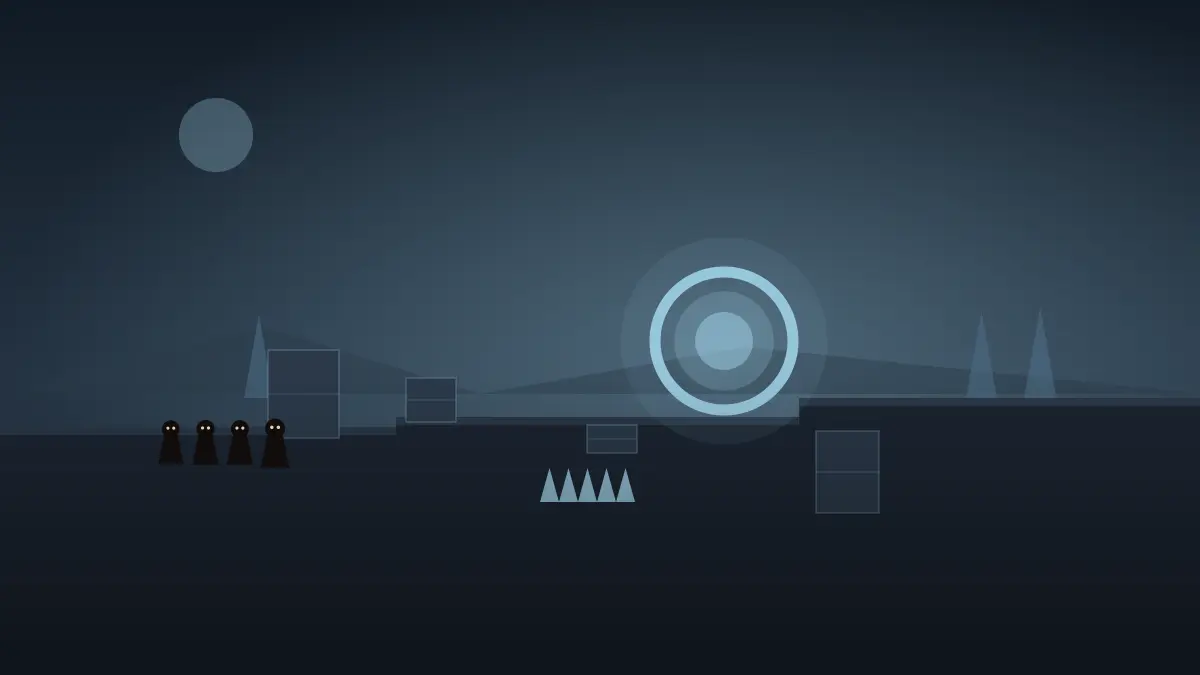
As with the earlier decades, these notes describe the problem shape and the placement order. Ritebound does not publish level data, so exact tile positions can differ on your build while the order rule stays the same.
Plate 31 — the long bridge. A gap that needs two planks end to end, with a single box to anchor the join. Lay the far plank first so the join sits on solid ground, then the near plank, then the box as the anchor. Doing it in the other order leaves the join floating.
Plate 32 — the staircase to nowhere. A stack of ledges climbing away from the portal. The answer is to ignore most of the staircase and cut across at the second ledge with a support piece. Climbing all the way up costs the whole budget and ends above the portal with no way down that the queue will take.
Plate 33 — the twin pits. Two crystal pits separated by a narrow pillar, with a trampoline in the budget. Bridge neither pit; launch from the pillar across both. A trampoline on the pillar clears the second pit and lands at the portal ledge, and it costs one piece instead of two.
Plate 34 — spikes over water. The layered hazard the finale is built around. Cover the spikes with a box, then plank the water beyond them. The order is fixed: cover, then bridge. Bridging first gives you nowhere to stand the box.
Plate 35 — the gargoyle gate. Three heads in a line with a landing ledge behind them. Two launches: one to clear the first pair, one to reach the ledge. If the budget only offers one trampoline, the plate is asking you to reroute around the third head rather than over it.
Plate 36 — the autumn long route. The widest level of the run, in autumn colours. The portal is visible from the door and there is no direct line. Follow the high ground to the right edge, then descend once. Any descent before the right edge puts you on the wrong side of the water.
Plate 37 — winter, and the hidden lip. A snow level where the final platform is one tile short of the portal ring. A single box against the lip fixes it, and the box is the piece most players have already spent. Budget one box for the portal step on every snow plate in this decade.
Plate 38 — the corridor of boxes. A narrow corridor with three height changes and no gaps. Every change is one box high, which means the corridor is a budget test rather than a geometry test. Two boxes, placed at the two changes the queue cannot walk around, is usually enough.
Plate 39 — the second-to-last check. A combination plate that reuses the covered pit, the gargoyle pair and the raised portal. Build backwards: portal step, then the launch, then the cover, then the bridge. If any piece is left when you reach the door, the route has a shortcut you have not found.
Plate 40 — the finale. The last plate is long, layered and generous with nothing. The portal sits behind a bridge, a launch and a step. Place them in that reverse order and run the level once at 2× before committing to a full-speed attempt, because the queue in the finale is the longest in the game and the tail is where it fails.
Where does the finale usually collapse?
At the tail of the queue on plates 32, 36 and 40. All three have a staircase or a descent where the last cultist takes a different line from the first, and all three fail silently for a second or two before the level resets.
The fix is not a new piece. It is placement depth: a box that sits flush against the ledge face gives the whole queue the same step, while a box placed one tile out gives the front of the line a jump and the back of the line a fall.
A glowing portal with cultists still on the route is not a cleared level. Wait for the last hooded figure to enter the ring before you touch the speed multiplier, or you will restart a run you had already solved.
Does the final level have a unique mechanic?
Nothing in the official screenshots suggests a new tool or a boss encounter on plate 40. It is a combination plate built from the same four pieces, with the longest route and the tightest counters of the run. The difficulty is length, not novelty.
That matters for planning. A finale attempt should be treated as a full rehearsal rather than a solve: run it once slowly to map the route, restart, then run it again at speed. The counters reset, the level does not change, and the second attempt is where the route actually gets learned.
What is worth doing after level 40?
There is no announced post-game, level editor or challenge mode in the store listings. The replay value described on the store pages is the puzzle itself, which in practice means going back to plates like 24, 30 and 40 to solve them with fewer pieces or at a higher speed. The speed and fast solves guide → covers the multiplier settings, and the hardest levels ranking → lists the plates worth returning to if you want a second pass that actually tests something.
Sources
Level structure, level count and platform details on this page come from the official listings rather than from a data dump: Ritebound on Steam ↗, the PlayStation Store page for PPSA40099 ↗ and the Nintendo eShop entry ↗.
Official source: Ritebound on Steam ↗
FAQ
How many levels does Ritebound have in total?
The Steam and PlayStation store descriptions both state 40 levels. The level plate in released screenshots also shows a tutorial plate numbered 0, which sits before plate 1 and is not part of the 40.
Is there a boss at the end of Ritebound?
No boss appears in any official screenshot or store text. Plate 40 is a long combination level, not a fight.
Do the last levels need the trampoline every time?
Plates 33, 35, 39 and 40 are much easier with a launch, and at least two of them expect one. The rest of the decade can be routed with boxes and planks if the counters allow it.
Why does the level not end when the front cultist reaches the portal?
Because the level completes on the whole queue, not the leader. Check the tail for a missed step at a staircase or a descent, and place a box flush against the ledge rather than one tile away.