
Ritebound Traps Guide: Spikes, Water, Gargoyles and Pits
Every Ritebound hazard seen so far: red spike strips, crystal pits, mist water, gargoyle heads and ice, with how to cover or avoid each one.
Ritebound kills cultists with five things: red spike strips, crystal pits, mist-covered water, gargoyle heads, and the occasional icy edge that hides a drop. None of them are explained in the store text, and the game does not pause to introduce them, so the first encounter with each is usually a lost attempt. This guide covers what each hazard does to a queue, whether it can be covered or has to be routed around, and the placement order that keeps the line moving. The boxes guide → covers the pieces you use against them.

What hazards are in Ritebound?
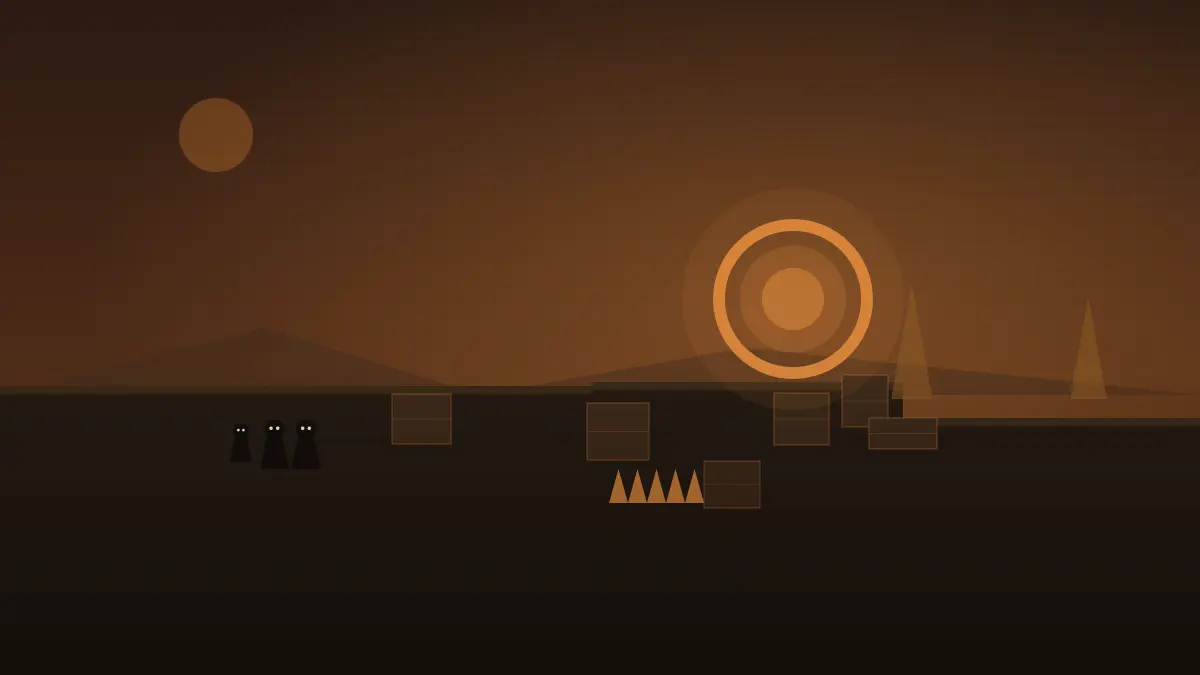
Spike strips. Short red bars set into the floor. They are the most common hazard in the footage and the only one that can be covered outright: a box placed on the strip turns it into floor.
Crystal pits. A drop to the bottom of the screen, lined with red crystal. There is no cover for a pit; the queue either crosses it or does not. A box dropped in does not fill it, it makes a step halfway down.
Mist water. Flat water with a fog layer. It reads as ground at a glance and behaves like a pit. Planks are the answer, and the plank has to reach solid ground at both ends.
Gargoyle heads. Stone heads that sit on the route and block it. They are the only hazard in the set that occupies vertical space, which makes them a launch problem rather than a cover problem.
Ice and snow edges. Winter plates use a white floor that hides one-tile gaps. Nothing in the footage shows slipping; the hazard is the read, not the physics.
The mist layer on water makes the surface look walkable at a glance. If a level has a wide flat band with fog on it, assume it is a pit until a cultist has walked it.
Which hazards can a box cover?
Only the spike strip. That is the important asymmetry in the whole hazard set, because it means cover is a narrow tool rather than a general one. A box over spikes makes floor; a box over water makes a sinking step; a box in a pit makes a lower ledge that the queue will happily walk down into.
The second covering trick is the gargoyle. You cannot place anything on a head, but you can place a support against the wall behind it so the queue climbs over instead of walking into it. That is a route fix rather than a cover, and it costs a taller piece.
The Levels 21-30 walkthrough → is where these interactions get combined: plate 24 is spikes and islands, plate 26 is water on three sides, plate 29 is a portal with a roof.
What is the correct order against layered hazards?
Cover, then bridge, then launch. The order is forced by what each piece needs to stand on.
Cover first because a box needs solid ground and a spike strip is solid ground. Bridge second because a plank needs both ends supported, and the covered spikes are now a supported end. Launch last because a trampoline needs a stable base under it, and the base is usually the bridge you just laid.
Reversing any two of those three steps produces a level that looks half-solved. Bridge-then-cover leaves the box with nowhere to go. Launch-then-bridge puts the trampoline under the plank, where it launches cultists into the underside of their own route.
How do you avoid a pit you cannot cover?
Route around it or cross it in one span. Pits are the levels' budget check: if a level shows three pits and hands you two planks, at least one pit is not on the intended route, and the level is asking you to stay on the high side.
The desert and autumn plates use this pattern most. A pit with a raised lip on one side usually means the route runs along the lip and only descends at the portal, rather than dropping into the middle of the level and climbing back out.
Do gargoyles move?
Nothing in the released screenshots shows a gargoyle moving, turning or attacking. They read as fixed obstacles that block a corridor, and the counter-play in the footage is height: a support or a trampoline to get the queue over them.
That makes them the one hazard you can plan around from the start of a level. If you can see a pair of heads from the door, you already know one of your four pieces is going to be spent on elevation, and the rest of the budget has to work with three.
References
Store facts and platform details are checked against Ritebound on Steam ↗, PlayStation Store (PPSA40099) ↗ and Nintendo eShop ↗. Comparison titles link to their own store pages where quoted.
Official source: Nintendo eShop — Ritebound ↗
FAQ
Can you jump over spikes in Ritebound?
The cultists do not jump on command, so no. Spikes are either covered with a box or avoided by routing the queue around them, and on most plates covering is cheaper than rerouting.
Does water kill cultists instantly?
The footage shows the queue sinking into mist water rather than being thrown back, and the level resets shortly after. Treat it as a pit: the run is over once the line enters it.
Are there boss enemies in Ritebound?
No boss appears in any official screenshot or store description. The gargoyle heads are fixed obstacles, not enemies with behaviour.
How many trap types does the game have?
Five appear across the official screenshots: spikes, crystal pits, mist water, gargoyle heads and icy edges. The store text describes pits, spikes and enemies generally, without naming them.