
Ritebound Tips and Tricks: 10 Habits That Save Restarts
Practical Ritebound tips: build from the portal backwards, read the skull counters as separate budgets, and use the restart button as a rehearsal tool.
Ritebound is a game where the wrong habit costs the whole level. There is no undo, the counters are exact from the middle of the run, and the queue keeps walking while you think. Ten habits separate a slow, restart-heavy first clear from a smooth one, and almost all of them are about reading the level before touching a piece. The walkthrough hub → covers the rules these habits are built on.
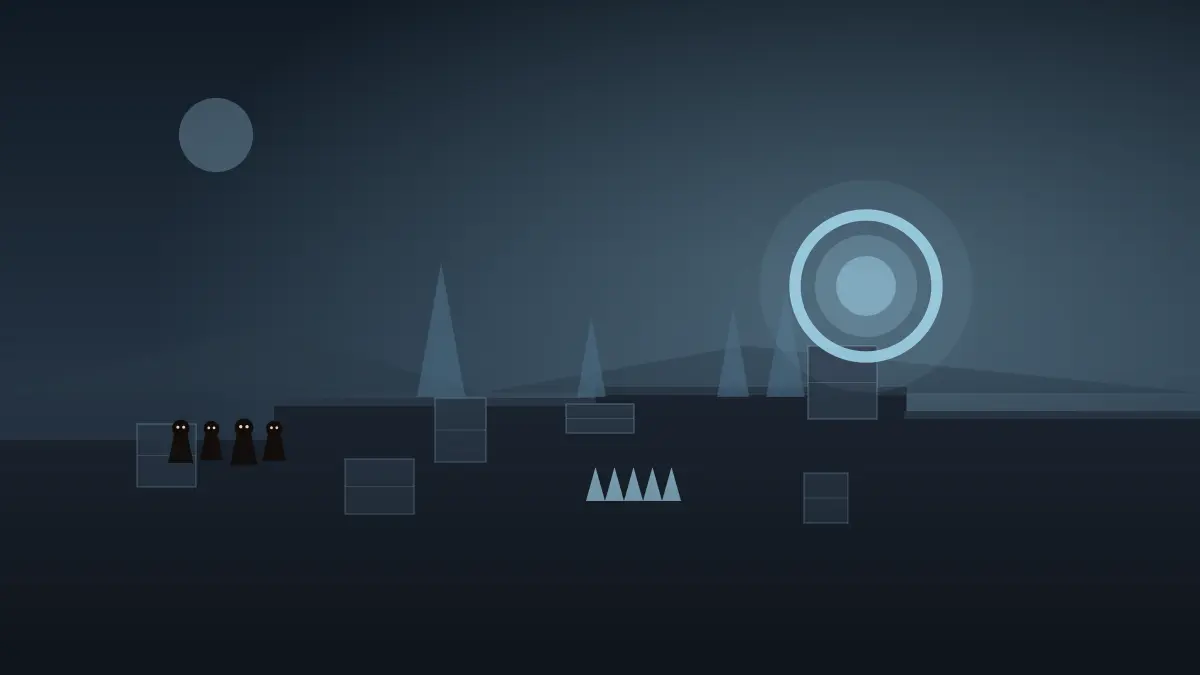
What is the single most useful habit?
Build backwards. Start at the portal and place the last piece first, then work back toward the wooden door. The reason is that the last placement has to survive the whole queue walking over it, and the pieces near the door only have to survive the start of the line.
Players who build forwards spend the bridge on the first scary gap and arrive at the last one with a square box that is too short. Building backwards makes that failure impossible, because the bridge is committed to the last gap before anything else is placed.
What should you check before placing anything?
Three counts, in this order.
- Gaps wider than one box. Each one needs a plank or a reroute.
- Ledges higher than one box. Each one needs a step, a support or a launch.
- Skull counters under the tool slots. These are per-piece budgets, not a shared pool.
If the first two counts are larger than the third, the level is not asking you to build every crossing. It is asking you to route the queue so it only crosses once, usually along the high ground.
A box one tile away from a ledge looks fine and fails at the back of the line. The front cultist jumps the gap and the last one walks into it. Push every piece until it touches the face it is meant to serve.
Which habits actually save time?
Restart at the first question mark. A stalled cultist means the route is broken, not slow. A rescue attempt spends a piece from an exact budget; a restart spends nothing.
Use 3× for diagnosis and 1× for building. Aiming a piece at triple speed is harder than the seconds you save.
Place everything before the door opens. The build bar does not pause the queue, so late placement is a second puzzle on top of the first.
Watch the back of the line, not the front. The leader reaches the portal long before the level completes. Failures live at the tail.
Pan the whole level before the first second ends. Ritebound shows the entire plate, and the portal is visible from the door on almost every level.
Save the trampoline for the place with no ground. It is the only piece that gains height without a base, which makes it irreplaceable on raised-portal plates.
Treat the fifth slot as gone. It is locked in every build shown, and any level that seems to need it is a reroute puzzle.
Learn the plate number, not the biome. Screenshots put a desert plate at 3, autumn at 10 and winter at 12, so biome order tells you nothing about which level you are on.
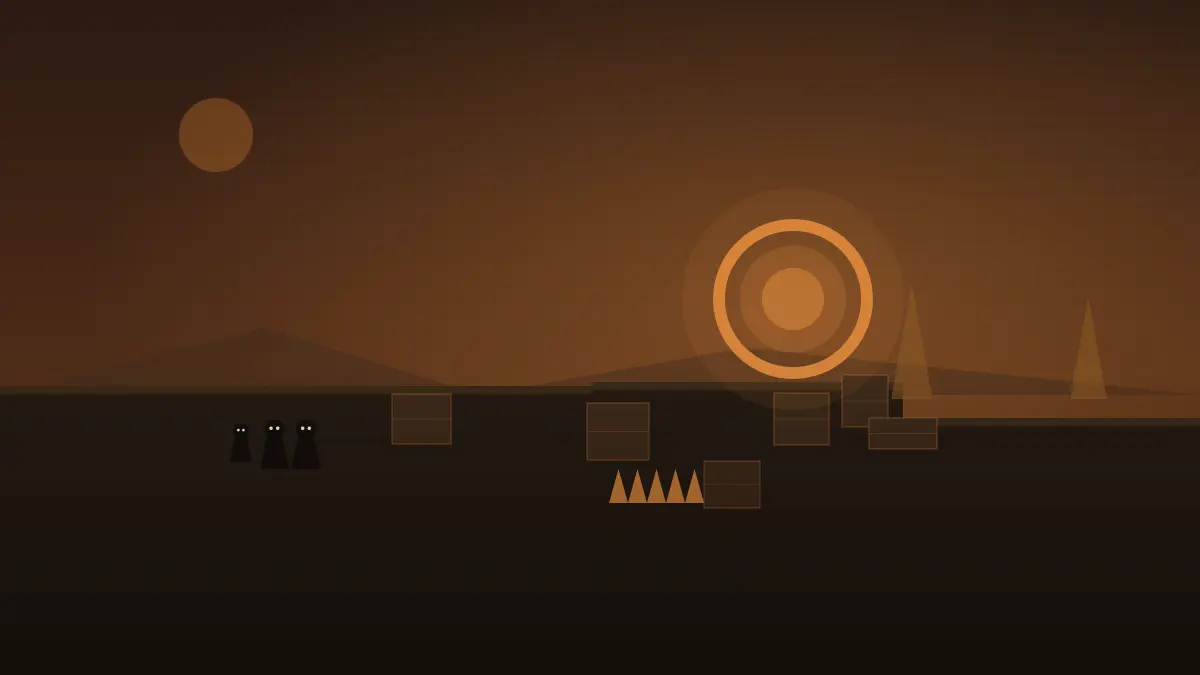
How should you handle a level you have failed five times?
Stop solving and start mapping. Run the level once without trying to win, at 2× or 3×, and write down where the queue stops. The question-mark spot is the only thing you need from that run; it tells you which piece the route is missing.
Then rebuild from the portal backwards with that piece reserved, and run the level at 1× once to confirm. If it fails in a new place, the new failure is progress: it means the first problem was solved and the route now reaches a second one.
The hardest levels ranking → is a list of plates where this loop is mandatory rather than optional, because the failure point sits two or three screens after the cause.
Do the tips change on Switch or PS5?
No. The puzzle rules are identical across the platforms that have store listings, and the HUD layout is the same in the Steam and PlayStation captures. What changes is the input device: a pointer on PC, and controller buttons on the consoles.
The Switch vs PS5 comparison → covers the documented differences, which are file size, language support and the storefront rather than anything that affects a solve.
Store references
Prices, dates and editions are taken from the live product pages: Ritebound on Steam ↗, PlayStation Store (PPSA40099) ↗ and Nintendo eShop ↗. Where the stores disagree, this page reports both versions instead of picking one.
Official source: PlayStation Store — Ritebound (PPSA40099) ↗
FAQ
Is there a hint system in Ritebound?
No hint button or skip option appears on the HUD or in the store descriptions. The question-mark bubble over a stalled cultist is the game's only feedback.
Should I replay levels for a better route?
Yes, if you enjoy the puzzle. The store pages describe the appeal as the puzzle itself, and several plates are quicker with a different piece order once you know the layout.
Does the game get easier after level 20?
The pieces stop changing, so the learning curve flattens, but the budgets tighten. Most players find the middle decade harder than the finale for that reason.
Are there collectibles to look for?
A wooden sign with lettering appears in some screenshots, but no store page describes a collectible system. There is no confirmed collectible to hunt at the time of writing.