
Ritebound Levels 21-30 Walkthrough: Mixed Tools
Ritebound levels 21-30 walkthrough: the middle decade where every plate mixes boxes, bridges and trampolines, plus the routing rule that keeps the queue alive.
Plates 21 to 30 stop introducing anything. Every tool has been on screen for twenty levels, the counters are exact, and the levels now ask you to use two pieces in combination rather than one piece per obstacle. That combination step is where most players stall, because a build that is individually correct piece by piece can still be wrong as a sequence. The Levels 11-20 notes → cover the budget change that sets this up; this page covers the plates themselves.
What makes the middle decade different?
Sequencing. On plates 1 to 20 a level usually has one hard crossing and one easy one, so the order only matters for the hard crossing. From plate 21 the levels are built as a chain: the plank you place for crossing A becomes the platform that the trampoline launch needs to clear crossing C. Place either one from the wrong side and the chain breaks even though both pieces are "correct".
There is a reliable way to spot a chain level before you build. Pan to the portal and look back along the route. If the route passes over the same horizontal band of the level more than once, the pieces are shared, and the order is not optional.
The other difference is that the middle decade finally uses the fifth slot's absence as a design tool. Several plates are shaped as if a fifth piece exists, and the intended solve is a reroute rather than an extra placement. If a plate looks one piece short, it usually is one piece short on purpose.
Level-by-level notes, plates 21 to 30
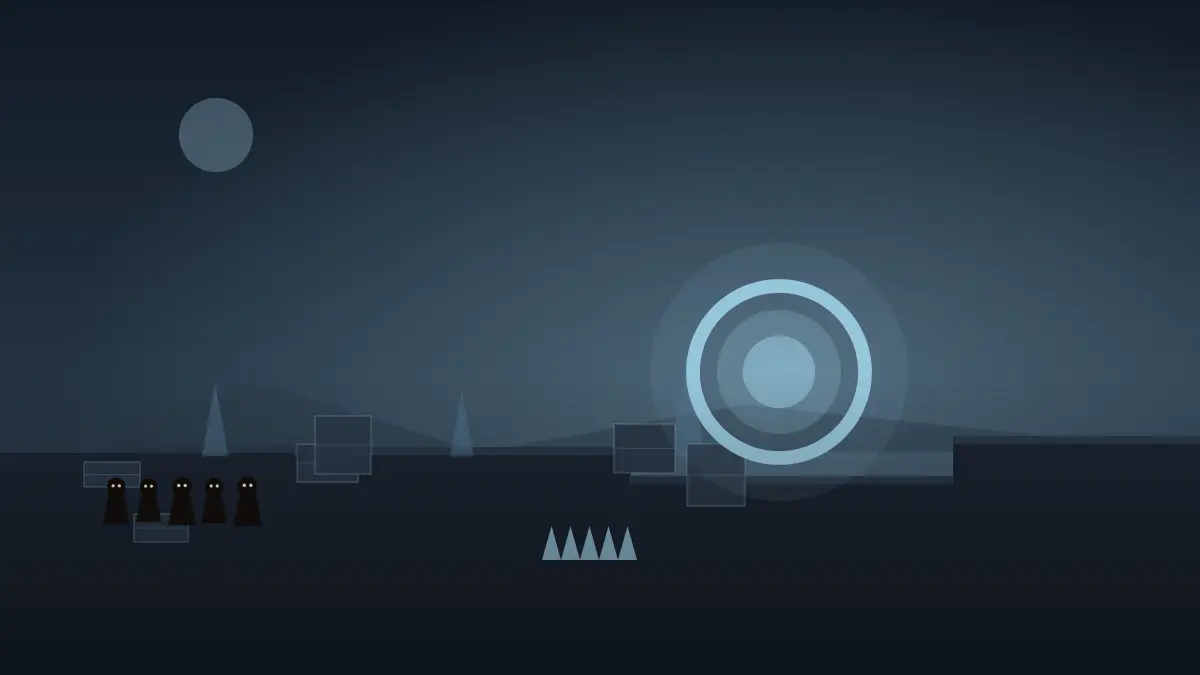
Ritebound does not publish level layouts, so these notes describe the shape of each plate and the order that clears it, drawn from the official screenshots and the rules the first two decades establish. The order is the part that transfers; exact tile positions may need a nudge on your build.
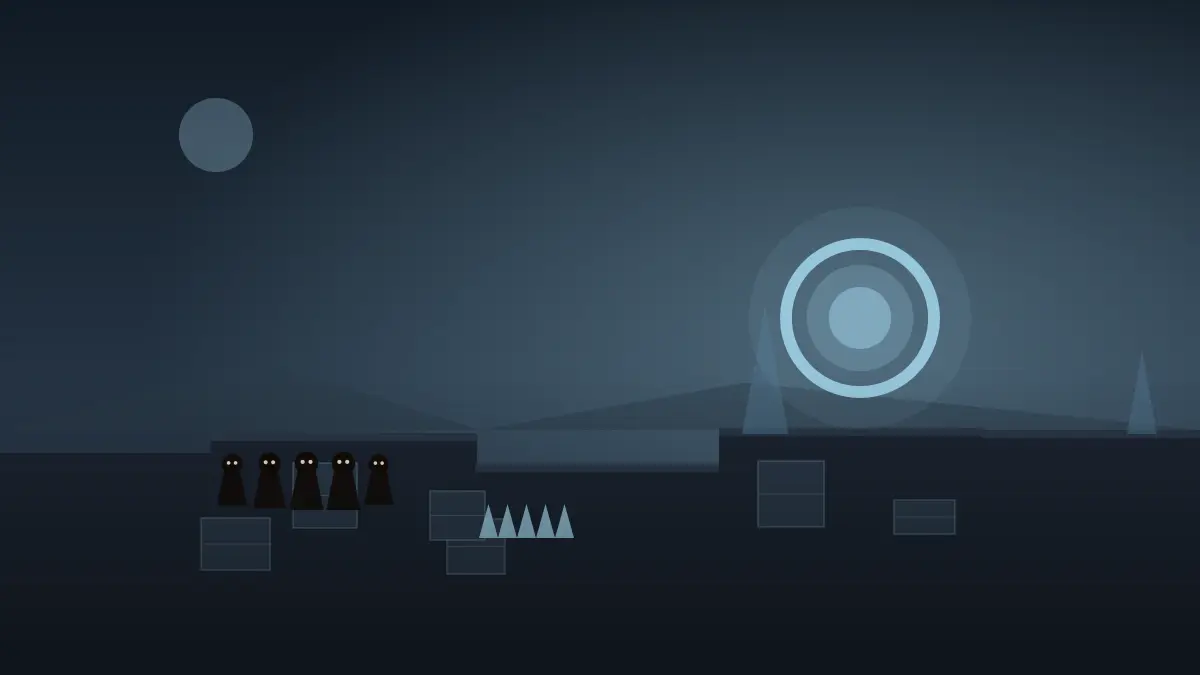
Plate 21 — the chain opener. A gap, a ledge, and a portal above both. The trampoline has to go on the far side of the gap, which means the gap has to be bridged first. Bridge, cross, launch. Building the launch first strands the queue on the near side with no trampoline left.
Plate 22 — the box as a door. A corridor with a side alcove holding the portal. The alcove entrance is one tile lower than the corridor floor. Drop a box in the entrance to flatten it, and the queue turns into the alcove instead of walking past. This is the first plate where a box is used to redirect rather than to support.
Plate 23 — two gargoyles, one trampoline. The pair of stone heads from plate 14 returns with a tighter landing. Launch one tile earlier than feels right; the arc clears both heads and lands on the ledge behind them, while a launch from the base of the heads clips the second one.
Plate 24 — the spike corridor. A long floor of red spikes with two safe islands. Two planks, three gaps, and no room to place a box between them. Lay the first plank from the start island to the middle, then the second from the middle to the far side, and do it before any cultist has left the door.
Plate 25 — the vertical shaft. A support piece and a trampoline in the same budget, with a shaft that needs both. Use the support as the first climb and the trampoline for the final exit, never the other way around: a launch from the shaft floor overshoots the exit ledge.
Plate 26 — water on three sides. An island with mist-water on three sides and the portal on the fourth. The plank is the only piece that keeps the whole line moving, and it has to be laid from the island outward, which means the queue must reach the island first. Check whether the near bank is actually connected to the door.
Plate 27 — the drop and the climb. Descending is free in Ritebound; climbing is not. This plate gives you a high start and a low portal, then puts a spike strip on the direct line down. Trade height for safety: drop early onto the safe ledge, walk the long way, and save both pieces for the final climb.
Plate 28 — autumn, three ledges. The autumn palette returns on a plate with three stacked ledges and a counter of two. The answer is not to climb all three; it is to find the ledge the queue can reach from the side and skip the middle one entirely.
Plate 29 — the covered portal. A portal ring with a solid roof directly above it, so a trampoline launch cannot land inside. The only entry is horizontal. Clear the floor into the ring with a box as a step and keep the plank for the gap before it.
Plate 30 — the decade finale. Wide gap, two gargoyles, raised portal, and a budget that covers exactly the intended chain: plank for the gap, support or trampoline for the heads, box for the final step. Build it strictly backwards from the portal and the chain assembles itself.
Which plates punish a forward build hardest?
Plates 21, 25 and 30. All three have a piece that must be placed on the far side of an obstacle the queue has not reached yet, and all three look solvable from the near side for the first few seconds. The question mark is the tell: if the front cultist stops on flat ground with a clear route ahead, the problem is a piece behind them, not in front.
Plate 22 is the fourth, for a different reason. The alcove redirection only works if the box is placed before the queue arrives at the junction. A late box turns a redirect into a wall, and a wall in a corridor is a full restart.
The last cultist is the one that fails. When a route looks clear and the level still fails, rewatch the back half of the queue at 2×. A one-tile gap that the front of the line steps over can swallow the stragglers.
How do you practise a chain route without losing the run?
Use restart as a rehearsal tool rather than a punishment. Build the far-side piece first, run the level at 3× to see where the chain breaks, then restart and rebuild in the corrected order. Two rehearsals cost less time than one improvised rescue, and the counters come back full each time.
The traps guide → is worth reading alongside this decade, because plates 24 to 29 are built almost entirely out of hazard placement rather than geometry. Knowing which hazards the queue can be walked past and which ones have to be covered changes the budget maths before you place anything.
Do you ever get a fifth tool?
No build shown in the official screenshots or store pages has the fifth slot unlocked; it appears greyed out with a lock across every level captured so far. Plan every plate in this decade around four tools, and treat any level that seems to need five as a reroute puzzle instead.
References
Store facts and platform details are checked against Ritebound on Steam ↗, PlayStation Store (PPSA40099) ↗ and Nintendo eShop ↗. Comparison titles link to their own store pages where quoted.
Official source: Nintendo eShop — Ritebound ↗
FAQ
Why does the middle decade feel harder than the finale?
Plates 21-30 introduce chaining, which is a new skill, while plates 31-40 mostly apply it. The difficulty curve is steepest where the concept is new, not where the levels are largest.
Can you skip a plate in Ritebound?
There is no level select visible in the released footage. The run is sequential, so a plate you cannot solve blocks the rest of the game, which is why the restart habit matters more than raw speed.
Is plate 30 a boss level?
No. There is no boss in any released material; plate 30 is a combination level that reuses the gargoyle, the wide gap and the raised portal in one build.
How many pieces should be left over at the end of a plate?
None on most levels from 21 onward. A leftover piece usually means you solved the plate with a shortcut the designers did not intend, which is fine, but it is not evidence that the budget is generous.